Fed Rate Cuts and Trump Tariffs: Impact on Japan's Economy
Fed and BOJ Interest Rate Signals
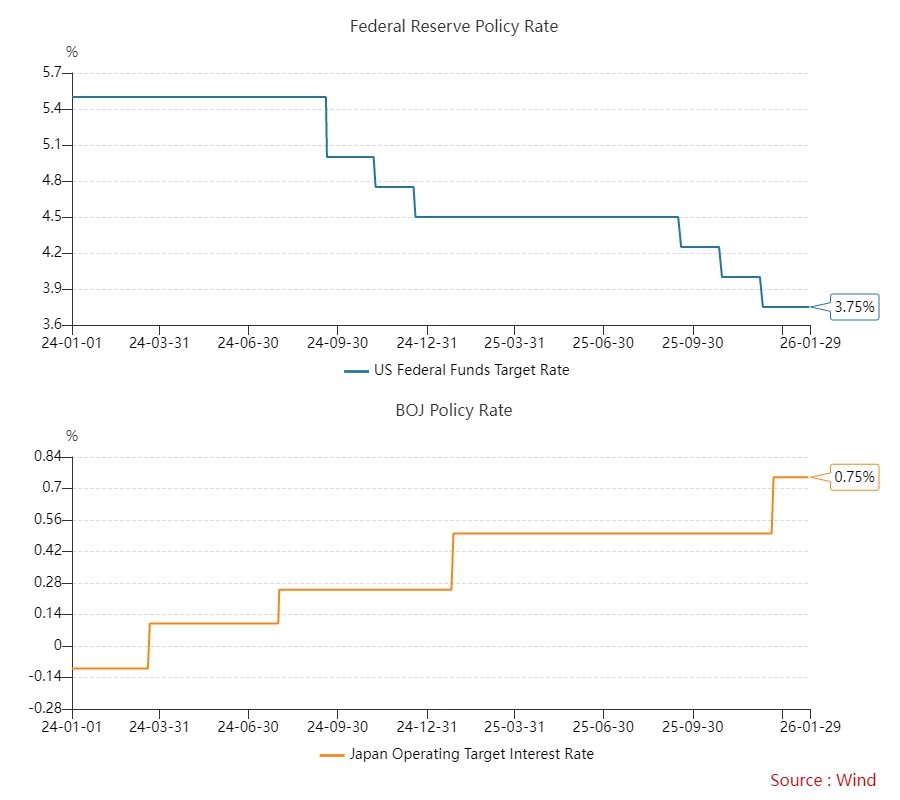
On October 30, 2025, the US Federal Funds Target Rate was lowered by 25bp to 4.00%, indicating the Federal Reserve's potential inclination toward adopting an accommodative monetary policy aimed at balancing economic slowdown and inflation risks. Japan's Operating Target Interest Rate remained unchanged at 0.50%.
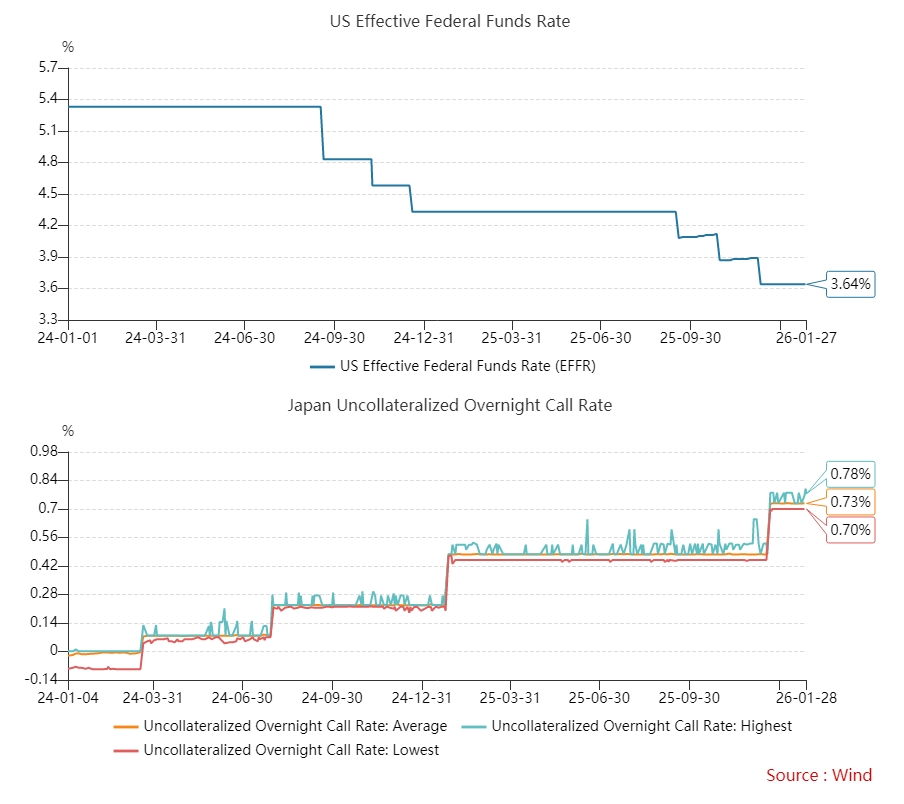
US-Japan Short-term Uncollateralized Market Interest Rate
On October 27, 2025, the US Effective Federal Funds Rate (EFFR) stood at 4.12%, showing a slight increase compared to previous days. Japan's average uncollateralized overnight call rate was 0.477%, remaining generally stable with no significant fluctuations. The notable difference in short-term interest rates between the two countries highlights their divergent monetary policy orientations.
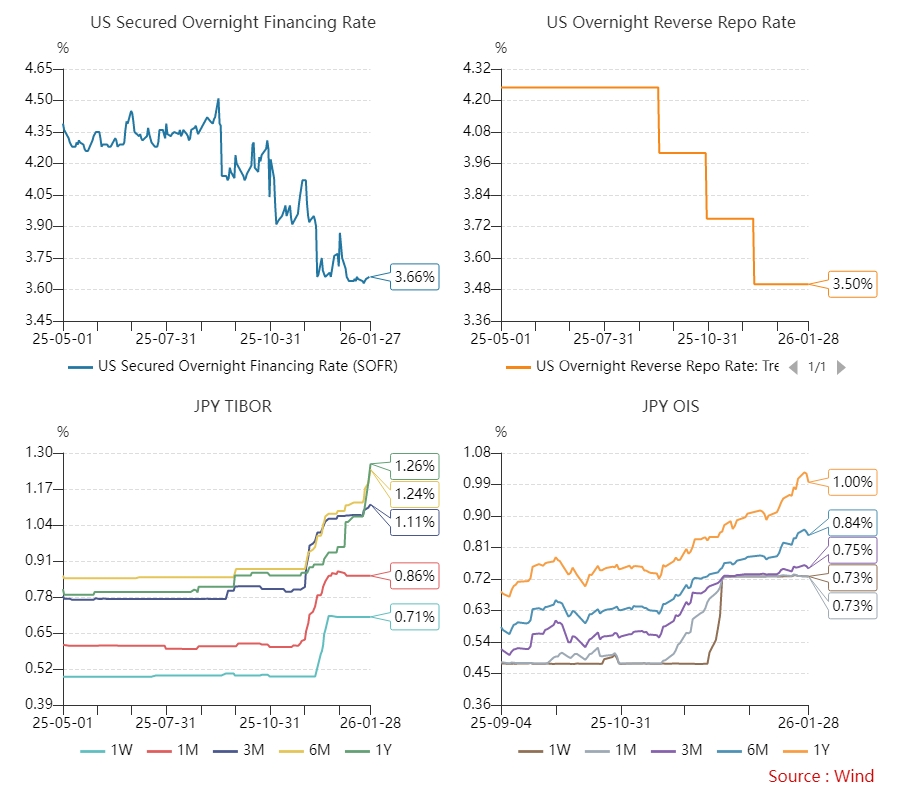
US-Japan Financial Market Interest Rate Pricing
On October 28, 2025, the US Secured Overnight Financing Rate (SOFR) reached 4.31%, continuing its recent upward trend, indicating increased demand for market liquidity. Short-term and long-term JPY TIBOR rates showed no significant changes, while the JPY OIS rate exhibited minor fluctuations.
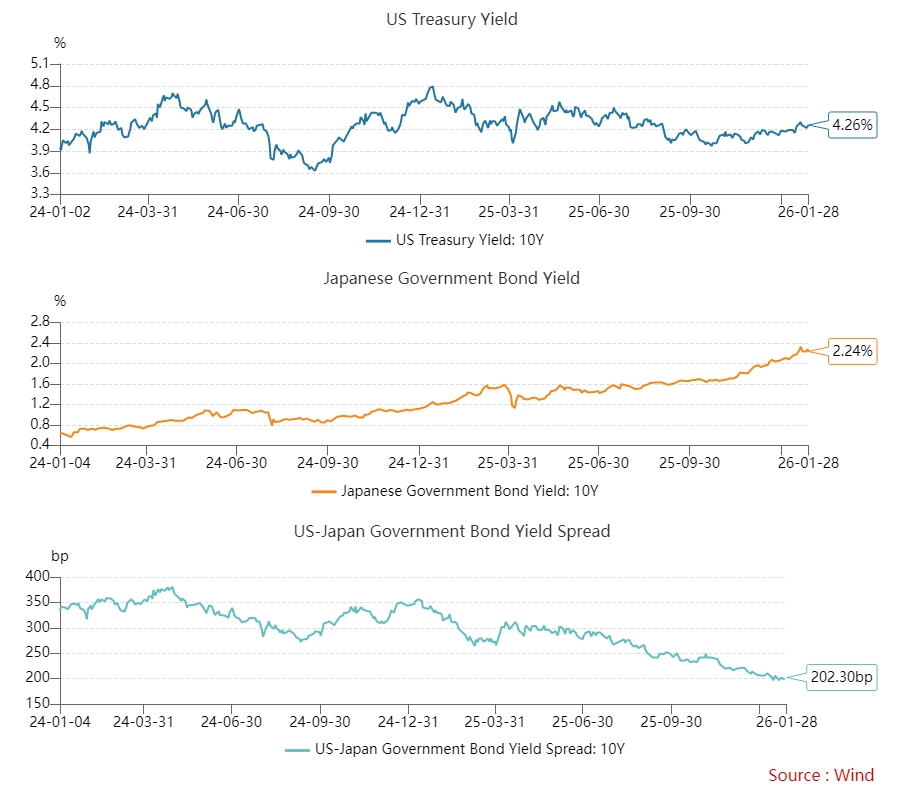
US-Japan Government Bond Yield Spread
On October 29, 2025, the US 10-year Treasury yield was 4.08%, while Japan's 10-year government bond yield stood at 1.66%. The US-Japan 10-year Government Bond yield spread narrowed further compared to September 2025, closing at 241.60bp.
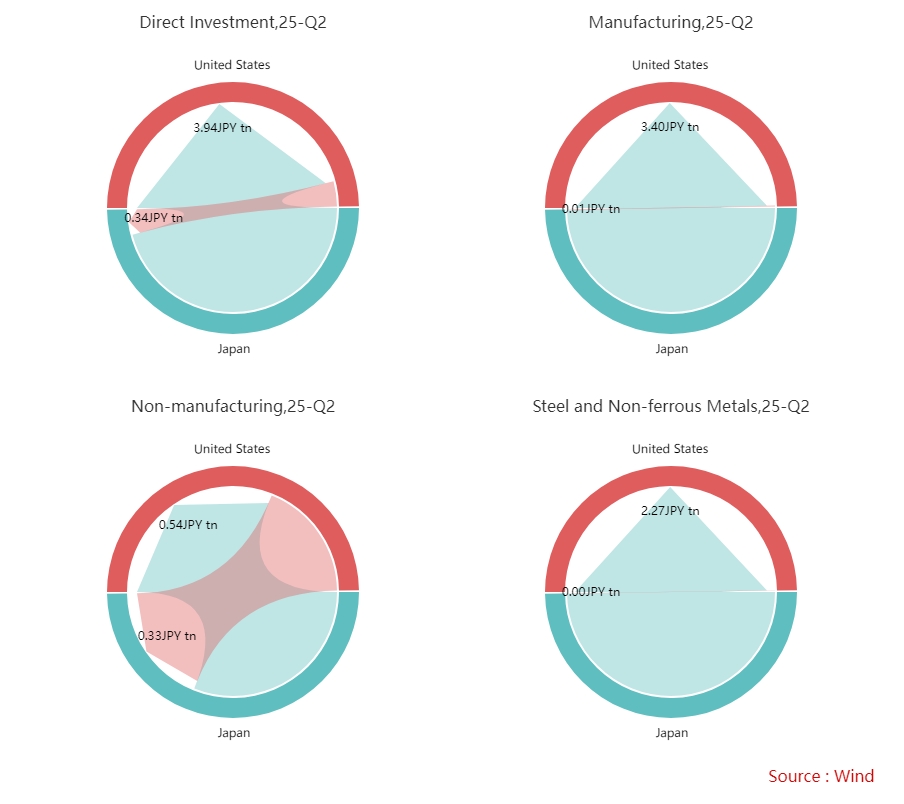
Japan and US Direct Investment
In Q2 2025, Japan's direct investment in the US reached JPY 3.94tn, significantly higher than the US direct investment in Japan of JPY 0.34tn. This indicates that Japan's capital exports to the US market were substantially stronger than imports. Japan's direct investment in the US manufacturing sector was JPY 3.40tn, suggesting that manufacturing investment remains dominated by Japanese capital.
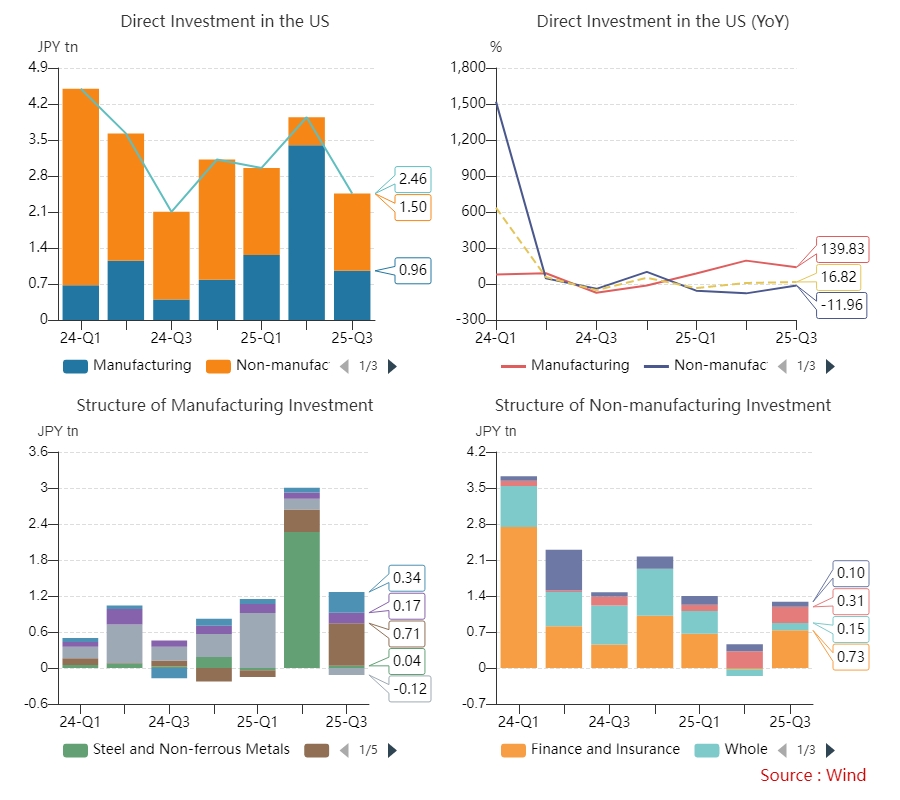
Japan's Direct Investment in the US
In Q2 2025, Japan's direct investment in the US showed significant QoQ growth, primarily driven by strong performance in manufacturing investment. Inflows in this sector reached JPY 3.40tn, a substantial YoY increase of 194.83%. In contrast, non-manufacturing investment performed weakly, highlighting a notable divergence between sectors.
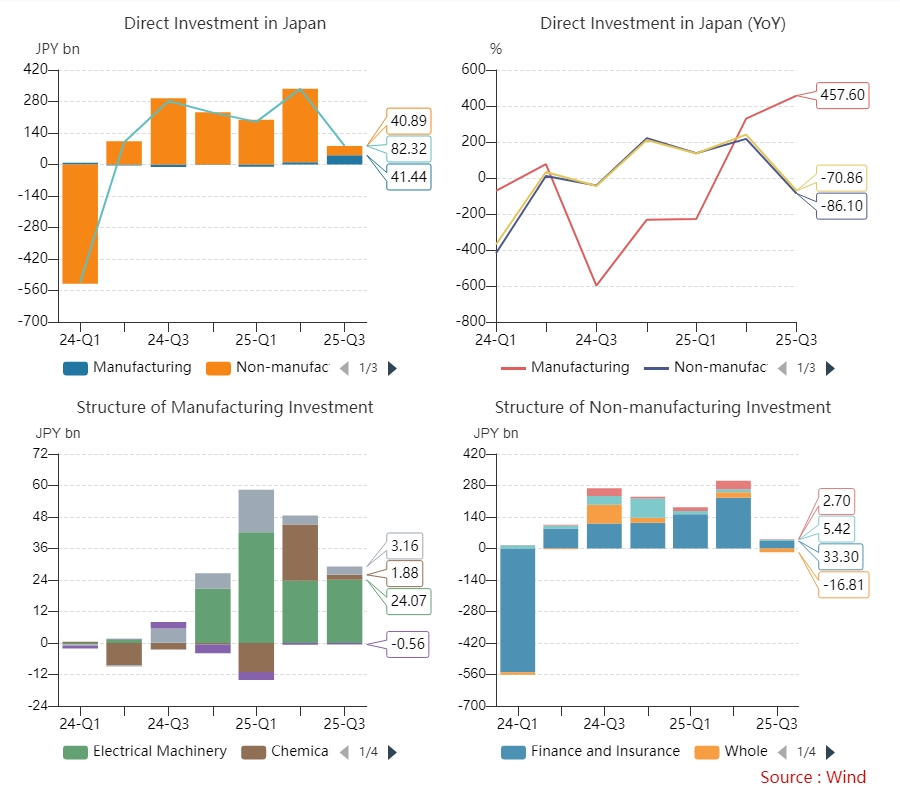
US Direct Investment in Japan
In Q2 2025, the US direct investment in Japan exhibited significant growth. Manufacturing inflows reached JPY 9.75bn, while non-manufacturing inflows amounted to JPY 326.49bn, bringing the total inflows to JPY 336.24bn. The YoY growth rates for these categories were 329.98%, 217.37%, and 240.89%, respectively. The electrical machinery manufacturing sector stood out.
Japan-US Cross-border Securities Investment
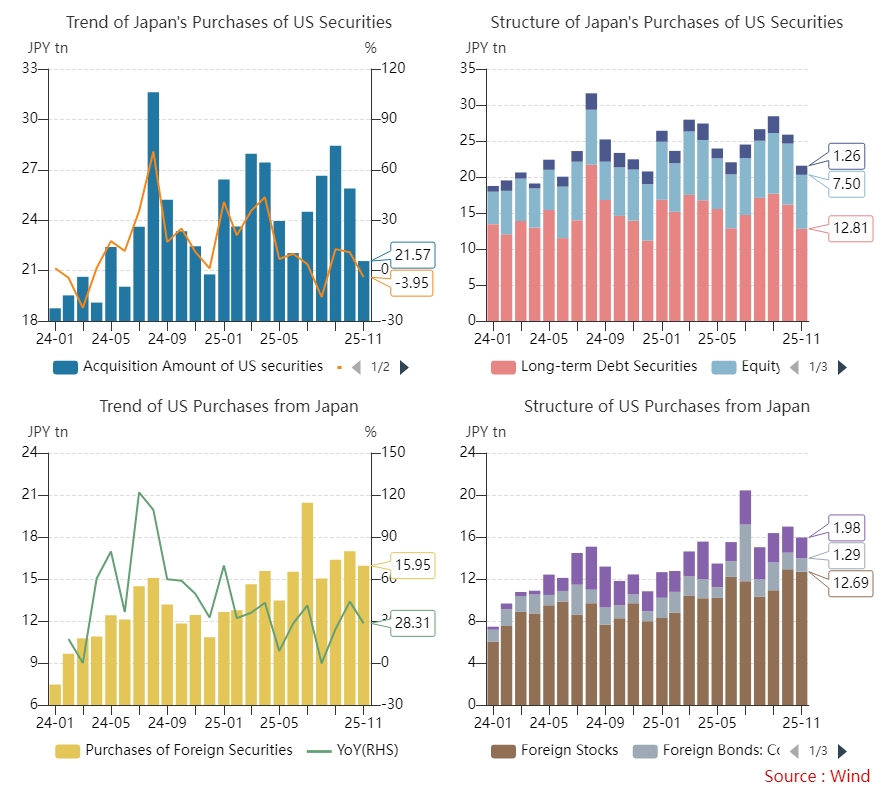
In August 2025, Japan's purchases of US securities amounted to JPY 26.63tn, a YoY decrease of 15.77%. Among these, long-term debt securities accounted for the highest proportion. In terms of US purchases of foreign securities from Japan, foreign stocks represented the largest share.
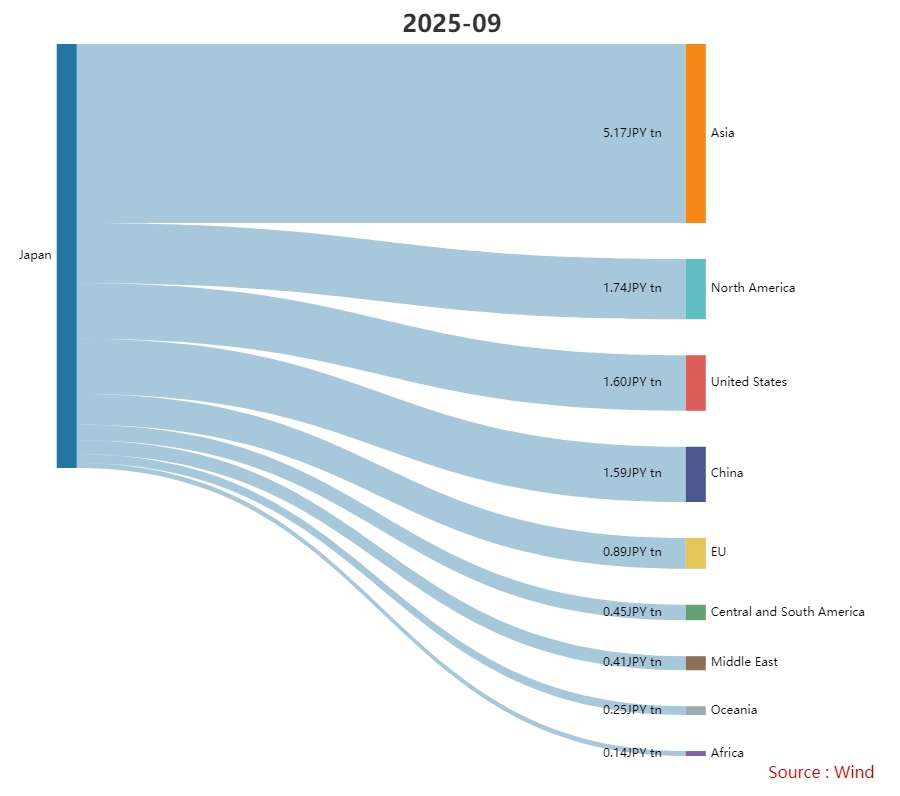
Japan's Exports to Major Economies
In September 2025, Japan's export performance to major economies varied. Exports to Asia amounted to JPY 5.17tn, the highest among all regions. Exports to the US reached JPY 1.60tn, higher than those to any other individual country, indicating that the US is Japan's largest single-country export destination.
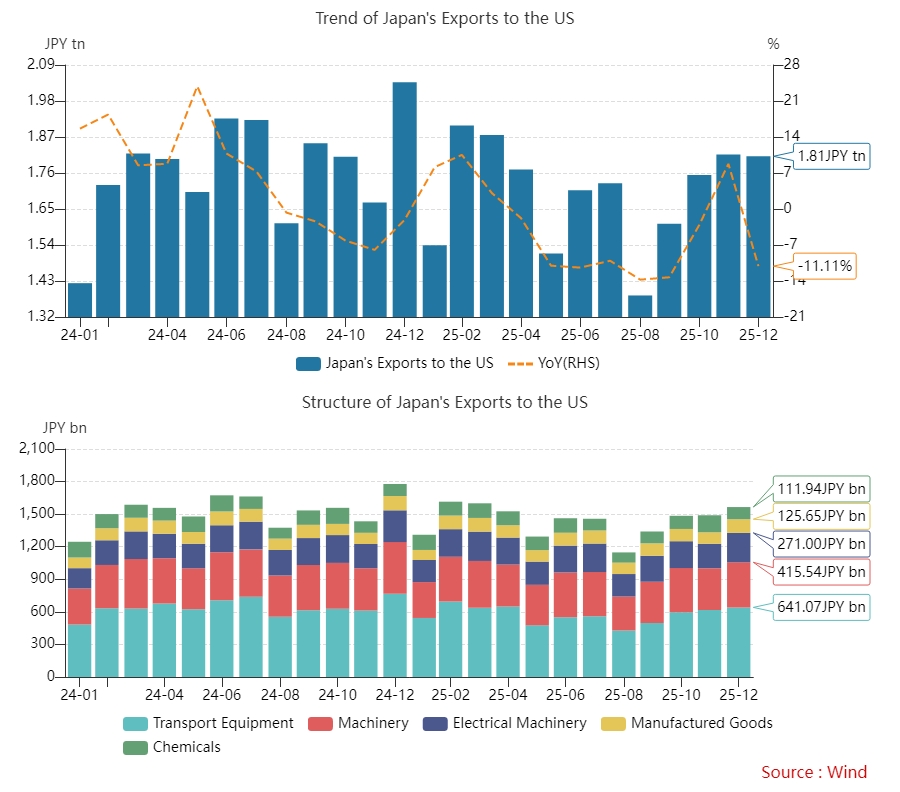
Japan's Export Trends and Structure to the US
In September 2025, Japan's exports to the US amounted to JPY 1.60tn, a YoY decrease of 13.28%. The YoY growth rate has been negative for multiple consecutive months, indicating persistent pressure on exports to the US. By product category, transportation equipment accounted for the largest share. Overall, Japan's export structure to the US remains dominated by high-value-added manufactured goods.
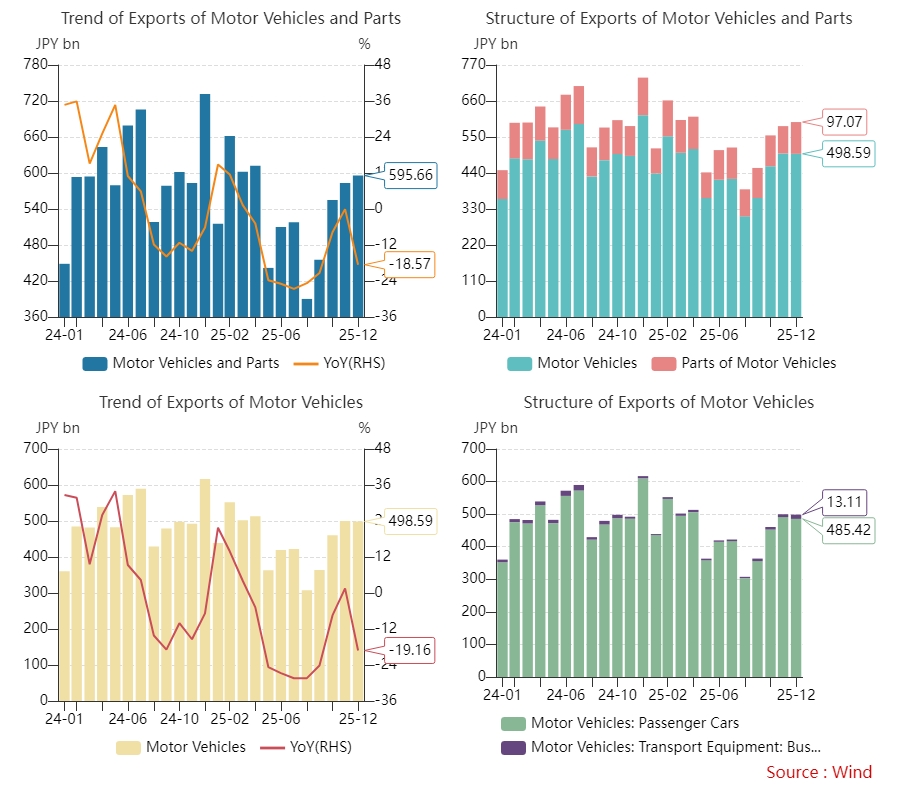
Japan's Motor Vehicles and Parts Exports to the US
In September 2025, Japan's exports of motor vehicles and parts to the US amounted to JPY 455.42bn, a YoY decrease of 21.33%. Among these, motor vehicle exports fell by 24.15% YoY. The overall decline in Japan's exports of automotive-related products to the US reflects its diminishing competitiveness in the American motor vehicle market.
Japan's Machinery Exports to the US
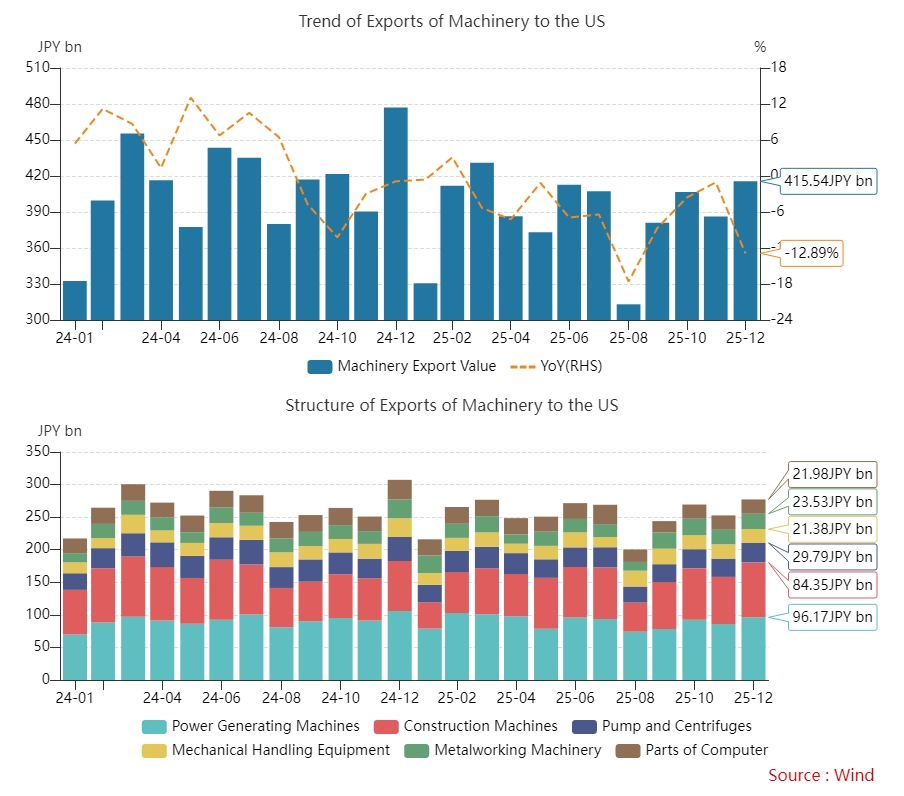
In September 2025, Japan's exports of machinery to the US amounted to JPY 381.02bn, a YoY decrease of 8.67%. Power generating machines and construction machines accounted for significant shares. The overall export value has declined YoY for multiple consecutive months, indicating ongoing challenges for Japan's machinery exports to the US.